Tag Archives: Prayer

Silence of the Father

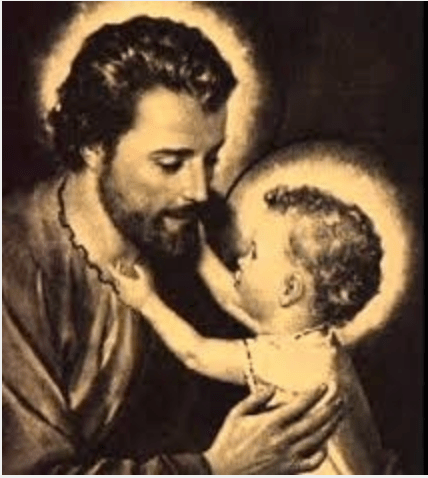
Saint Joseph, so serene, so humble, so loving, and so faithful as you contemplate the Baby Jesus in your arms. You were for Jesus on this earth the image of His Father in Heaven. You were for Mary on this earth the most loyal and loving husband. Who can fathom the beauty of your holiness, the depth of your compassion?

Saint Joseph, who have no record of speech in the Scriptures, you are the Master of the art of silence, the prayer of silence, which you perfected in the presence of Jesus and Mary. Not the silence which shuts out others, but the silence which welcomes every concern; not the silence which breeds misunderstanding, but the silence which is true communion; not the silence which freezes the heart, but the silence which opens hearts to love. 

This silence which breathes life, shines light, and communicates in a language beyond the power of words.

St John of the Cross had understood the power of silence when he wrote that what God most desires is that we are silent before Him, “with the tongue and with the desire, for the prayer which He hears best is the language of silent love.”

This is not to say that prayer with words is not to be practiced. No, on the contrary, words in prayer are essential. But what it does mean is that we ought to progress to the language of silent love, in the advanced spiritual life, like two lovers who hold hands in silent love, because their hearts are so united that they have no need for words, and can commune more perfectly in silence.

Saint Joseph is the image of God the Father. We will never tire contemplating this idea if we have truly entered into its meaning, gained a little glimpse into its truth. Saint Joseph is the silence of the Father, this silence which again St John of the Cross understood so well:

“The Father spoke one Word, which was His Son, and this Word He always speaks in eternal silence, and in silence must It be heard by the soul.” (St John of the Cross, Maxims and Counsels, 21)

What profound words ! Words which recall the silence of the Father!

How can we begin to understand such silence? How can we, poor children, so poor in spirit (as Jesus alludes to in His sermon on the Mount), begin to enter into the silence of the Father? When we are so caught up with so many words, so much information, so many misunderstandings in human life, in the course of daily life, let alone the spiritual life, with so many thoughts and affections and desires running around in hearts and minds—how can we begin to be silent so that the Holy Spirit can touch us, and mould us, and help us to enter into the silence of the Father?

Perhaps if we follow Saint Joseph in his earthly pilgrimage, and reflect on the mysteries which he shared with Jesus and Mary, we might begin to be still, and to realise what the sacred Scripture refers to:

“Be still, and know that I am God.” (Psalm 46:10)

LG Sleiman

26th January 2012

Can The Church Bless Sinners?

LG Sleiman

20th January 2024

Fiducia Supplicans, published by Cardinal Victor Manuel Fernandez, Prefect of the Dicastery for the Doctrine of the Faith (DDF) on 18th December 2023, and personally signed by Pope Francis, gives permission to priests to give a “spontaneous” blessing to couples who are in an “irregular situation”.

The most contentious point of this declaration comes down to this: priests can now bless same-sex couples and other couples who are living in sin.

Some have welcomed this as an act of mercy and compassion; some decry it as blasphemous; and others are representing this as a sort of “coming of age” of the Catholic Church.

What are we to make of Fiducia Supplicans? Should the Church make herself ready to bless sinners? What is God’s will in regard to sinners?

Does God Bless Sinners?

Jesus said that the Father “makes His sun to rise on the evil and on the good, and sends rain on the just and on the unjust.” (Matthew 5:45) It is clear, therefore, that God pours His blessings upon everyone, saints and sinners alike.

If we think about it carefully, God is always pouring His blessings upon us: from one rising of the sun to the next, and so on and so on.

Every time I wake up to a new day, that is a blessing. Every time I pick a beautiful flower, that is a blessing. Every time I see a beautiful sunset, that is a blessing. Every time someone offers me a smile or a helping hand, that is a blessing.

Every time I attend holy Mass or read the Sacred Scriptures or enter a Church or my private room with a prayerful heart, there is a blessing for me.

Every time I avail myself of the Sacraments of Reconciliation and Holy Communion, that is a great and wonderful blessing—a blessing that is open to each and every sinner, no matter the number or gravity of his/her sins.

The number of God’s mercies is too great to fathom: “The steadfast love of the Lord never ceases, his mercies never come to an end; they are new every morning; great is thy faithfulness.” (Lamentations 3:22-23)

Let us not forget, however, the greatest blessing that the Father could ever have bestowed upon us: “God proves His love for us in this: While we were still sinners, Christ died for us.” (Romans 5:8) God did not wait for sinners to turn to Him with a humble and contrite heart before He chose to send His Son, Jesus Christ, to save us from our sins.

Even God’s justice is a blessing, springing from God’s love—because His justice (in time) rescues souls from damnation (in eternity). Compare with this passage in Saint Faustina’s Diary:

“Praise the Lord, my soul, for everything, and glorify His mercy, for His goodness is without end. Everything will pass, but His mercy is without limit or end. And although evil will attain its measure, in mercy there is no measure. O my God, even in the punishments You send down upon the earth I see the abyss of Your mercy, for by punishing us here on earth You free us from eternal punishment. Rejoice, all you creatures, for you are closer to God in His infinite mercy than a baby to its mother’s heart. O God, You are compassion itself for the greatest sinners who sincerely repent. The greater the sinner, the greater his right to God’s mercy.” (Diary, 423)

From the most interior inspirations with which God moves my heart, to the descent of the only begotten Son of God from eternity into the realm of human affairs, to the sending of the Holy Spirit, to the gift of Christ’s own Mother to the Church, to the gift of prayer and intimate communion with the God who dwells within, to the gift of innumerable saints, mystics and holy prelates, God never ceases to watch over His people and to pour innumerable blessings upon them.

We ought not to forget in this consideration the resurrection of Jesus Christ on the third day after His Sacred Passion. What a blessing! To know and understand that God’s redemptive love extends beyond the grave, beyond the power of death, and offers me an eternity of beatitude, glory, and everlasting happiness, if only I will accept the Lord’s invitation!

For Jesus said, “All that the Father gives me will come to me, and whoever comes to me I will never cast out.” (John 6:37)

After Christ’s ascension into Heaven, He sent the gift of His Holy Spirit to inhabit every believer’s heart, to guide and direct the soul, to inspire and nurture the soul, to love and sanctify each believer, who is the temple of the Holy Spirit of God.

God never ceases to search out my heart and, in a thousand million ways, to remind me of His love and to draw me into a loving relationship with Himself.

At some point in my journey, my heart must turn to the Lord, respond to his love, turn away from sin, take his outstretched hand, and allow God to bless me—not just with an ordinary blessing, but with the fulness of eternal life and glory.

When Jesus began to preach, His first words were: “Repent, for the kingdom of heaven is at hand.” (Matthew 4:17) To “repent” means to turn away from sin, to return to the Lord with a humble and contrite heart, and to enter again into the friendship of God.

Compare with Chronicles: “If my people who are called by my name humble themselves, and pray and seek my face and turn from their wicked ways, then I will hear from heaven and will forgive their sin and heal their land.” (2 Chronicles 7:14)

Though I may be surrounded with thousands of blessings, I will not enter into the Lord’s friendship if I do not choose the Lord’s will above my own: “You are my friends if you do what I command you.” (John 15:14)

In order to make the transition from the enjoyment of God’s blessings to the supreme blessing of God’s friendship I must, by the grace of God, turn away from sin, embrace the will of God, and persevere in the fulfilment of God’s will: “Not everyone who says to me, ‘Lord, Lord,’ will enter the kingdom of heaven, but the one who does the will of my Father who is in heaven.” (Matthew 7:21)

The problem with Fiducia Supplicans is that it effectively denies any requirement on the part of the soul to turn away from sin in order to enter into the friendship of God. This involves the idea of a false mercy.

The Problem With Fiducia Supplicans

Fiducia Supplicans inspires/engenders a duplicitous attitude in the approach to God’s blessings. By repeatedly emphasising the mercy and compassion of God while, at the same time, avoiding any requirement on the part of the soul to turn away from sin in order to know God’s mercy, Fiducia Supplicans gives the impression that God’s blessings are completely free, that the soul may continue to enjoy God’s favour while living in an irregular, sinful relationship, and that the way to Heaven does not involve any form of submission to the will of God.

This is extremely dangerous for the life of the soul and will, unless it is prevented by the proclamation of the truth, lead many souls astray, and one step closer to eternal perdition.

Let us now look at specific statements in this DDF declaration.

Fiducia Supplicans: Couples living in sin do not require “moral perfection” in order to receive a blessing from the Church. This is correct. Jesus never demanded moral perfection in order to grant his mercy; He only required a repentant heart. So, for example, when the Lord had healed the paralytic man, He said to him: “Behold, thou art made whole: sin no more, lest a worse thing come unto thee.” (John 5:14)

Fiducia Supplicans: “Catholic priests can bless same-sex couples as an expression of pastoral closeness without condoning their sexual relations.” But this only camouflages the truth. One of the greatest deceptions (rehearsed over and over again) is that the Church can adopt certain pastoral practices to the exclusion of writing new doctrines. The truth is that doctrinal statements and pastoral practices are inseparable: every pastoral approach carries doctrinal presuppositions and, conversely, every doctrinal pronouncement gives shape and form to pastoral activity.

Fiducia Supplicans: “It is precisely in this context that one can understand the possibility of blessing couples in irregular situations and same-sex couples without officially validating their status or changing in any way the Church’s perennial teaching on marriage.” But actions speak louder than words. People will inevitably read this as the Church’s endorsement of sinful lifestyles. Why single out couples who are in an irregular, sinful relationship for a blessing? Most will interpret this as the Church’s approval of sinful lifestyles, regardless of how many caveats are embedded into the declaration.

Fiducia Supplicans: “Indeed, there is the danger that a pastoral gesture that is so beloved and widespread will be subjected to too many moral prerequisites, which, under the claim of control, could overshadow the unconditional power of God’s love that forms the basis for the gesture of blessing.” But the reality is that God’s “moral prerequisite” is to turn away from sin.

Fiducia Supplicans: “Thus, when people ask for a blessing, an exhaustive moral analysis should not be placed as a precondition for conferring it. For, those seeking a blessing should not be required to have prior moral perfection.” This is just more camouflage. No one can become morally perfect without the help of Christ (compare with John 15:5—“Without me you can do nothing”). But to enter into friendship with Christ the soul must turn away from sin and accept the saving grace of God.

Fiducia Supplicans: This new practice is heralded as “a positive message of comfort, care, and encouragement. The blessing expresses God’s merciful embrace and the Church’s motherhood, which invites the faithful to have the same feelings as God toward their brothers and sisters.” This represents a false mercy because it gives the impression that God will forgive those who have not yet turned away from sin, which is impossible.

True mercy is the Good Shepherd who leaves the ninety-nine (who are not lost) and goes after the one sheep (who is lost), who tirelessly calls the sinner to turn back to God, who lays down His life for the sinner rather than see him go to perdition. False mercy, on the other hand, teaches that you can be forgiven without repenting, sanctified without renouncing your sins, and reach Heaven without doing the will of God.

Let us acknowledge that the Lord loves His sheep, has given His life for them, and calls them to repentance, to love Him in return, and to cooperate with His Divine will in order to enter, in the fulness of time, into eternal life.

As Saint Augustine said, “The God who created you without your consent will not save you without your consent.”

It is not an act of charity to deceive a soul by making it comfortable with sin, for “the wages of sin is death.” (Romans 6:23) True charity reveals the truth about God’s mercy so that the soul can find its way back to spiritual health, to a life of grace, and to eternal friendship with God.

LG Sleiman

Transformed By The Renewal of Your Mind

St Paul who (before his conversion) was thrown off his horse by the glorious Light of the risen Christ, admonishes us: “Let God transform you into a new person by changing the way you think. Then you will learn to know God’s will for you, which is good and pleasing and perfect.” (Romans 12:2)

One possible shade of meaning, among others, would be: “So I have to change the way I think.” But how can I change the way I think? How do I even begin to think differently? And the answer is not so obvious.

In a better translation of the Bible, it reads thus:

“Do not be conformed to this world but be transformed by the renewal of your mind, that you may prove what is the will of God, what is good and acceptable and perfect.” (Romans 12:2; RSVCE)

To be “transformed by the renewal of your mind” is an expression that is far more rich; it holds a meaning that is far more broad and deep.

So how can you be “transformed by the renewal of your mind”, you might ask? We know that the first step is to turn away from sin.

Sin darkens the mind. Whether you know it or not. Whether you believe it or not.

As St Paul wrote: “For although they knew God they did not honor him as God or give thanks to him, but they became futile in their thinking and their senseless minds were darkened.” (Romans 1:21)

And again: “And since they did not see fit to acknowledge God, God gave them up to a base mind and to improper conduct.” (Romans 1:28)

And again: “They are darkened in their understanding, alienated from the life of God because of the ignorance that is in them, due to their hardness of heart.” (Ephesians 4:18)

Those who live in sin cannot see clearly. Their mind is darkened. That’s why Jesus taught us to follow Him: “The light is with you for a little longer. Walk while you have the light, lest the darkness overtake you; he who walks in the darkness does not know where he goes.” (John 12:35)

Aldous Huxley wrote: “The victim of mind manipulation does not know that he is a victim. To him, the walls of his prison are invisible, and he believes himself to be free.”

Just as the victim of mind manipulation “does not know that he is a victim”, so also he who lives in sin cannot see the darkness of his own mind.

But Jesus does not want us to be victims of sin and darkness. He calls to us from the deepest Love: “Come to me all who labour and are heavy burdened, and I will give you rest.” (Matthew 11:28)

“I am the light of the world; he who follows me will not walk in darkness, but will have the light of life.” (John 8:12)

Having turned away from sin, the soul then needs to “draw near to God” (James 4:8); the soul must “grow in the grace and knowledge of our Lord and Saviour Jesus Christ.” (2 Peter 3:18)

To be “transformed by the renewal of your mind” is not something that you can achieve on your own strength. It can only be accomplished when you turn to God in faith and love.

As soon as you turn back to God in faith and love, God begins to enlighten your mind and to warm your heart, and to draw you ever closer to Himself in the spirit of prayer and loving communion with Jesus.

And when this happens, the soul is increasingly transformed into God’s likeness—not because the soul deserves to be raised to such union with God, but by the glorious power of God’s merciful Love: “And we all, with unveiled face, beholding the glory of the Lord, are being changed into his likeness from one degree of glory to another; for this comes from the Lord who is the [Holy] Spirit.” (2 Corinthians 3:18)

And when this happens, the Lord increasingly imparts to us the same knowledge, wisdom, and understanding of His own mind: “For who has known the mind of the Lord so as to instruct him? But we have the mind of Christ.” (1 Corinthians 2:16)

Prayer of the Rosary

Jesus said: “There is no problem or difficulty that cannot be solved or resolved by faithful persevering recourse to My Mother’s most holy Rosary. The Rosary is My Mother’s gift to the poor and to the simple, to the little ones who alone are capable of hearing the Gospel in all its purity and of responding to it with a generous heart.

“It is to such as these—the childlike and the weak, the poor and the trusting—that the Rosary is given. It is to such as these that the Rosary belongs.

“There are no sufferings that cannot be borne peacefully, so long as a soul is praying the Rosary. Through the Rosary, all the grace and power of My mysteries passes through My Mother’s Immaculate Heart into the hearts of the little ones who invoke her, repeating the angel’s “Ave” over and over again. There are illnesses that can be cured through the Rosary.

“There are clouds of darkness and confusion that only the Rosary can disperse, and this because it is My Mother’s favourite prayer, a prayer that originated in the heights of heaven and was carried to earth by My Archangel, a prayer echoed and amplified in the Church through the ages, a prayer loved by all My saints, a prayer of disarming power and of immense depth.

“There are those who find the Rosary difficult. The difficulty lies not in the Rosary but in the complexity of those who struggle to enter into its simplicity. Invite souls to the prayer of the Rosary; through it I will heal the sick of mind and body, through it I will give peace where there is conflict, through it I will make great saints out of great sinners, through it I will sanctify My priests, give joy to My consecrated ones, and raise up new vocations in abundance.

“Listen, then, to My Mother’s plea in so many places. Listen to her, take her plea to heart, pray her Rosary and, for you, as for her, My Father will do wondrous things.”

Words of Jesus to a Benedictine Monk in prayer.

From: “In Sinu Jesu: When Heart Speaks to Heart — the Journal of a Priest at Prayer.” 2nd December 2014

30 Day Novena to St Joseph

Our Lady once revealed to Venerable Mary of Agreda that “Whatever my spouse asks of the Lord in Heaven is granted upon the earth.”

This 30 day Novena Prayer to Saint Joseph, prayed with confidence in honour of the 30 years he spent with Jesus and Mary, has been known to draw great graces and even miracles from heaven. To take part in this Novena, say the following prayer every day for 30 days, followed by one Our Father, Hail Mary, and Glory Be.

PRAYER

Revised and enlarged by LG Sleiman, 5th March 2023

Ever blessed and glorious Joseph, kind and loving father, and helpful friend of all in sorrow! 

You are the good father and protector of orphans, the defender of the defenceless, the patron of those in need and sorrow. 

Look kindly on my requests. My sins have drawn down on me the just displeasure of my God, and so I am surrounded with unhappiness. 

To you, loving guardian of the Family of Nazareth, do I go for help and protection. 

Listen, then, I beg you, with fatherly concern, to my earnest prayers, and obtain for me the favors I ask of you. 

I ask it in virtue of the purity of heart and excellence of love with which you committed your life to the service of God. 

I ask it in virtue of the joy and beatitude that filled your heart when you were betrothed to the holy Virgin Mary.

I ask it by the infinite mercy of the eternal Son of God, which moved Him to descend from Heaven to earth and to be clothed in human nature because He delights to dwell among the children of men. 

I ask it by the joy that filled your heart when the angel revealed to you that Mary’s child was conceived by the Holy Spirit.

I ask it in virtue of your holy matrimony, the joyful harmony of your lives, and the blessed union of your hearts.

I ask it by the weariness and suffering you endured when you found no shelter at the inn of Bethlehem for the Queen of Heaven and, being everywhere refused, you were forced to take shelter in an abandoned cave.

I ask it in virtue of your joy when you witnessed the peace that quietly descended upon a sleeping world when the Son of God was born of the holy Virgin Mary on a cold winter night in Bethlehem. 

I ask it in virtue of your joy in seeing the Divine Child visited by angels, shepherds, and wise men from the East. 

I ask it by the loveliness and power of the sacred Name of Jesus which you conferred on the adorable Infant. 

I ask it by the painful torture you felt at the prophecy of holy Simeon, which declared Jesus and Mary future victims of our sins and of their great love for us. 

I ask it through your sorrow and pain of soul when the angel declared to you that the life of the Child Jesus was sought by His enemies, so that you had to flee with Him and His Blessed Mother to Egypt. 

I ask it by all the suffering, weariness, and labors of that long and dangerous journey.

I ask it by all the care and solicitude with which you embarked upon your return journey home with Jesus and Mary, when you were instructed to come out of Egypt. 

I ask it by your peaceful life in Nazareth where you met with so many joys, ever new infusions of divine grace, and so many tokens of God’s loving kindness. 

I ask it by your great distress when the adorable Child was lost to you and His Mother for three days after your visit to Jerusalem. 

I ask it by your indescribable joy at finding Him in the Temple, and by the comfort you found at Nazareth, while living in the company of Jesus and Mary. 

I ask it by the indescribable humility Jesus manifested in His submission and obedience to you.

I ask it in virtue of the love and fidelity with which you continued to serve Jesus and Mary all the days of your life.

I ask it by the perfect love and obedience with which you accepted the Divine order to depart from this life, and from the company of Jesus and Mary.

I ask it in virtue of your sacred and holy and happy death, because you died in the arms of Jesus and Mary. 

I ask it by the joy which filled your soul, when the Redeemer of the world rose from the dead, took possession of His Kingdom, and led you therein with special honors. 

I ask it through Mary’s glorious Assumption, and through that endless happiness you share with her in the presence of God. 

O good father! I beg you, by all your sufferings, sorrows, and joys, to hear me and obtain for me what I ask. (Here name your petitions or think of them.) Obtain for all those who have asked my prayers and all those who pray for me everything that is useful to them in the plan of God.

My dear patron and father, be with me and all who are dear to me in our last moments, that we may eternally sing the praises of JESUS, MARY and JOSEPH.

“A blameless life, St. Joseph, may we lead, by your kind patronage from danger freed.”

St Joseph, Pray for us.

Our Father. Hail Mary. Glory Be. 

Prayer for a Loved One

In the midst of my plight, I turn to you, O holy Mother of God, my Mother, begging you to turn the gaze of your merciful eyes upon me, surround me with your love and protection, and lead me to know and love your divine Son, Jesus Christ my Lord.

A loved one of mine was going through a difficult time in her life and, as I looked on, I sought to pray for her in the same measure as her difficulties were great.

My prayer was guided by what I had recently discovered about the intimate union of our Lady with the Sacred Heart of her divine Son, in the midst of His most difficult moments, through the revelations of Sister Maria of Agreda (a 16th century Franciscan nun in Spain).

Sister Maria writes that holy Mary, through a special grace, was given the privilege of “seeing” all that her divine Son suffered during His Sacred Passion, as well as perceiving the unceasing acts of love and prayer of His Sacred Heart.

Christ had long promised His Mother that “in return for the new human existence which she had given Him in her virginal womb [the Incarnation], He would, by His almighty power, give her a new existence of divine and eminent grace above all other creatures”, and this promise of Christ “was continually fulfilled [in the course of her earthly life].”

“To this favour was due also her deep science and enlightenment concerning all the operations of the sacred humanity of her Son, none of which ever escaped her knowledge and attention.”

But whatever Mary “perceived” in the interior of her Son’s Heart, she also ”imitated” with fidelity:

“Whatever she thus perceived she imitated; so that she was always anxious to study and penetrate [Christ’s interior acts] with deep understanding, to put them promptly into action, and to practice them courageously and zealously during all her life. In this neither sorrow could disturb her, nor anguish hinder her, nor persecution detain her, nor the bitterness of her suffering weaken her.”

As a consequence of her “deep science and enlightenment”, Mary “felt in her own virginal body all the torments of Christ our Lord, both interior and exterior.”

But within such a hidden mystery, “there was concealed therein another mystery. This was, that the desire of Christ to see His exalted love and [goodness] as exhibited in His Passion copied in all its magnitude in a mere creature, was fulfilled in her, and no one possessed a greater right to this favour than His own Mother.” (Mystical City of God, volume 3, Chapter XXII, 670)

Thus was Mary increasingly conformed to the likeness of her divine Son, both in His suffering and in His acts of mercy—even in the midst of His most difficult and painful torments.

Filled with these thoughts, I pondered, how much more can Mary’s vision penetrate the depths of our own experiences, trials, and struggles?

With each glance of her soul, Mary understood the depth of Christ’s suffering as well as the unfathomable love which moved Him to suffer. If her gaze can penetrate all the depth of the Son of God’s suffering, love, and interior movements, how much more can Mary penetrate all the depth of our own hearts?

Do we not pray in the Salve Regina, “…turn then, O most gracious advocate, your eyes of mercy towards us, and after this our exile, show unto us the blessed fruit of your womb, Jesus”?

Just as Mother Mary was fully present to Christ in His suffering, she is also able to be present to me in the course of my earthly pilgrimage, and nothing is impervious to the turn of her merciful gaze.

By a special grace from God, the one who is “full of grace”, with one glance of her eyes, understands me better than I understand myself. And with that understanding, Mother Mary sees clearly all the depth of my struggles, the nature of my pain, and the desires of my heart.

I therefore resolved to make the following prayer for my loved one, and to entrust her, and all the dimensions of her quest, to the holy Mother of God:

I beseech you, holy Mother of God, my Mother Mary, to turn your loving gaze upon my loved one, surround her on every side with your unfailing protection; cover her in your holy mantle; press her to your holy bosom; and receive all the depth of her needs, struggles, and intentions in your Immaculate Heart—both those intentions that are spoken, and those that remain hidden—with the same love with which you never failed to watch over your divine Son, unto peace, joy, and eternal life.

“Hail Mary, full of grace, the Lord is with thee. Blessed art thou among women, and blessed is the fruit of your womb, Jesus. Holy Mary, Mother of God, pray for us sinners, now and at the hour of our death. Amen.”

LG Sleiman

The Appetites Of Man

1st June 2021
Feast of St Justin Martyr

The appetite for pleasure, money, and power: these are the fundamental appetites of human nature. Any and every temptation can only appeal to one or more of these three appetites.

These appetites can be man’s downfall, or else the path by which he overcomes temptation and merits victory in Christ.

For to master these appetites is to be the master of oneself, to be self-possessed, and to be in a greater capacity to surrender oneself to the will of God. But to be mastered by one’s appetites, by one or more of the appetites, is to become a slave to them, a slave to sin, and to be estranged from the grace and glory of God.

Saint John the Beloved warned against these appetites: “Do not love the world or anything in the world. If anyone loves the world, the love of the Father is not in him. For all that is in the world—the desires of the flesh, the desires of the eyes, and the pride of life—is not from the Father but from the world. The world is passing away, along with its desires; but whoever does the will of God remains forever.” (1 John 2: 15-17)

If one is mastered by one’s appetites (the lower desires), this becomes like a spiritual wound which festers and grows, perhaps becomes a sort of spiritual abscess, against which the soul will struggle as it seeks sound health, until it is set free by the mercy and grace of God.

“The love of money is the root of all evil.” (1 Timothy 6:10) The same can be said of an immoderate love of pleasure or power.

How many souls have fallen because they could not liberate themselves from an attachment to the love of money, power or pleasure?

Whether one is a Christian or not, religious or not, priest or nun, brother or sister, mother or father, son or daughter, one can only advance toward union with God by seeking the mercy of God, by doing the will of God, through the gift of God’s grace with which He empowers us to overcome sin, temptation, and to master ourselves, for the glory of God.

He who does not master himself cannot submit his will to God, and he who does not submit to the will of God cannot master himself. These two go hand in hand.

For “the world is passing away, along with its desires; but whoever does the will of God remains forever.”

Notice too that the devil’s three temptations of Christ in the wilderness correspond to the three appetites (Matthew 4:1-11): for pleasure, power, and riches.

Isn’t it interesting that history seems to have given us clear examples of all three appetites leading to the downfall or perhaps the temporary downfall of some poor soul?

One mystic wrote that Judas betrayed our Lord because Judas was, from the very beginning, only interested in success and attached to the love of money—he controlled the common “purse” (collective money) for the apostles and he ultimately betrayed the Lord for 30 pieces of silver.

Saint Paul (before his conversion) was attached to power: he wanted to round up all Christians and put them away or put them to death.

Pope Alexander VI fell from grace because of his attachment to pleasure, power, and money: he had several mistresses and fathered several children, while securing his power through alliances with various political powers.

No one is immune from such trials, and we ought to be sober, watchful and vigilant, as the Lord encouraged us to be. (Luke 21:36)

Through our Lord Jesus Christ we can overcome all things and know the victory of Christ, the joy of living in Christ, and the peace that surpasses all understanding.

The Divine Mercy Chaplet

The Divine Mercy Chaplet is prayed on the beads of the Rosary, was taught to Sister Faustina by our Lord Jesus Himself, and carries great promises and graces. Our Lord Jesus dictated this prayer to Saint Faustina on 13th September 1935 (Diary of St Faustina, paragraph 476).

Jesus said that whenever this chaplet of the Divine Mercy is prayed that His Heart is stirred to its very depths, that He will protect all who pray it during their life and especially in the hour of their death, that He will grant anything that is compatible with His Divine will through this prayer, that the whole world is brought closer to God when this Chaplet is prayed (929), and that when this prayer is said in the presence of a dying person that “I [Jesus] will stand between My Father and the dying person, not as the just judge but as the merciful Saviour.” (Diary of St Faustina, 1541) Continue reading The Divine Mercy Chaplet