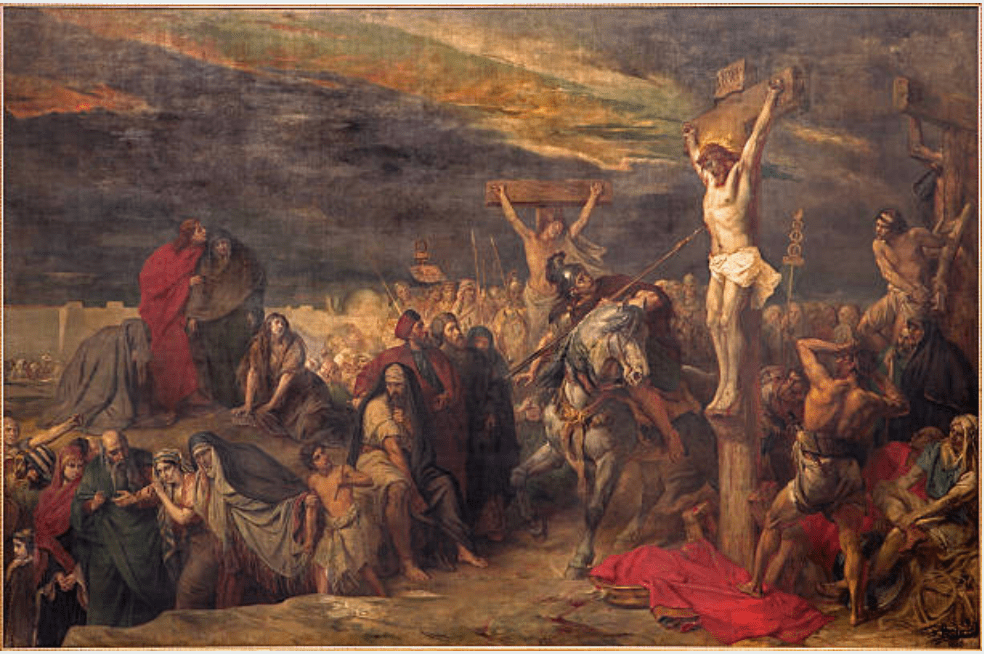
The Lord Jesus asked, through Sister Maria Faustina Kowalska, that the first Sunday after Easter Sunday be celebrated as the feast of Divine Mercy. Many years later, Pope St John Paul II fulfilled our Lord’s request so that this Feast day is universally celebrated throughout the entire Church.
Jesus made a very special promise: whoever goes to Confession and Holy Communion on the Feast of Mercy will receive, not only the forgiveness of sins, but the forgiveness of all temporal punishment and all time in purgatory.
Here is our Lord’s promise:
“My daughter, tell the whole world about My inconceivable mercy. I desire that the Feast of Mercy be a refuge and shelter for all souls, and especially for poor sinners.
“On that day the very depths of My tender mercy are open. I pour out a whole ocean of graces upon those souls who approach the fount of My mercy. The soul that will go to Confession and receive Holy Communion shall obtain complete forgiveness of sins and punishment.
“On that day all the divine floodgates through which grace flow are opened. Let no soul fear to draw near to Me, even though its sins be as scarlet. My mercy is so great that no mind, be it of man or of angel, will be able to fathom it throughout all eternity.
“Everything that exists has come forth from the very depths of My most tender mercy. Every soul in its relation to Me will contemplate My love and mercy throughout eternity. The Feast of Mercy emerged from My very depths of tenderness. It is My desire that it be solemnly celebrated on the first Sunday after Easter. Mankind will not have peace until it turns to the Fount of My Mercy. “
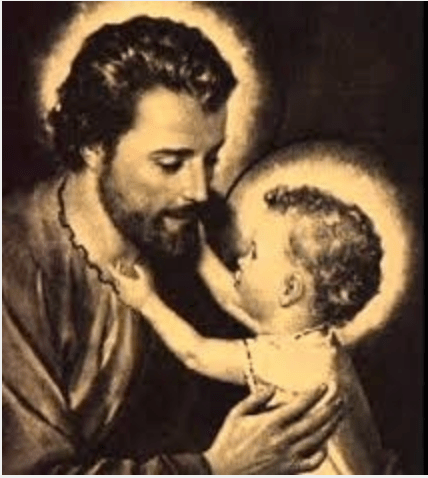
Saint Joseph, so serene, so humble, so loving, and so faithful as you contemplate the Baby Jesus in your arms. You were for Jesus on this earth the image of His Father in Heaven. You were for Mary on this earth the most loyal and loving husband. Who can fathom the beauty of your holiness, the depth of your compassion?
Saint Joseph, who have no record of speech in the Scriptures, you are the Master of the art of silence, the prayer of silence, which you perfected in the presence of Jesus and Mary. Not the silence which shuts out others, but the silence which welcomes every concern; not the silence which breeds misunderstanding, but the silence which is true communion; not the silence which freezes the heart, but the silence which opens hearts to love.
This silence which breathes life, shines light, and communicates in a language beyond the power of words.
St John of the Cross had understood the power of silence when he wrote that what God most desires is that we are silent before Him, “with the tongue and with the desire, for the prayer which He hears best is the language of silent love.”
This is not to say that prayer with words is not to be practiced. No, on the contrary, words in prayer are essential. But what it does mean is that we ought to progress to the language of silent love, in the advanced spiritual life, like two lovers who hold hands in silent love, because their hearts are so united that they have no need for words, and can commune more perfectly in silence.
Saint Joseph is the image of God the Father. We will never tire contemplating this idea if we have truly entered into its meaning, gained a little glimpse into its truth. Saint Joseph is the silence of the Father, this silence which again St John of the Cross understood so well:
“The Father spoke one Word, which was His Son, and this Word He always speaks in eternal silence, and in silence must It be heard by the soul.” (St John of the Cross, Maxims and Counsels, 21)
What profound words ! Words which recall the silence of the Father!
How can we begin to understand such silence? How can we, poor children, so poor in spirit (as Jesus alludes to in His sermon on the Mount), begin to enter into the silence of the Father? When we are so caught up with so many words, so much information, so many misunderstandings in human life, in the course of daily life, let alone the spiritual life, with so many thoughts and affections and desires running around in hearts and minds—how can we begin to be silent so that the Holy Spirit can touch us, and mould us, and help us to enter into the silence of the Father?
Perhaps if we follow Saint Joseph in his earthly pilgrimage, and reflect on the mysteries which he shared with Jesus and Mary, we might begin to be still, and to realise what the sacred Scripture refers to:
Fiducia Supplicans, published by Cardinal Victor Manuel Fernandez, Prefect of the Dicastery for the Doctrine of the Faith (DDF) on 18th December 2023, and personally signed by Pope Francis, gives permission to priests to give a “spontaneous” blessing to couples who are in an “irregular situation”.
The most contentious point of this declaration comes down to this: priests can now bless same-sex couples and other couples who are living in sin.
Some have welcomed this as an act of mercy and compassion; some decry it as blasphemous; and others are representing this as a sort of “coming of age” of the Catholic Church.
What are we to make of Fiducia Supplicans? Should the Church make herself ready to bless sinners? What is God’s will in regard to sinners?
Does God Bless Sinners?
Jesus said that the Father “makes His sun to rise on the evil and on the good, and sends rain on the just and on the unjust.” (Matthew 5:45) It is clear, therefore, that God pours His blessings upon everyone, saints and sinners alike.
If we think about it carefully, God is always pouring His blessings upon us: from one rising of the sun to the next, and so on and so on.
Every time I wake up to a new day, that is a blessing. Every time I pick a beautiful flower, that is a blessing. Every time I see a beautiful sunset, that is a blessing. Every time someone offers me a smile or a helping hand, that is a blessing.
Every time I attend holy Mass or read the Sacred Scriptures or enter a Church or my private room with a prayerful heart, there is a blessing for me.
Every time I avail myself of the Sacraments of Reconciliation and Holy Communion, that is a great and wonderful blessing—a blessing that is open to each and every sinner, no matter the number or gravity of his/her sins.
The number of God’s mercies is too great to fathom: “The steadfast love of the Lord never ceases, his mercies never come to an end; they are new every morning; great is thy faithfulness.” (Lamentations 3:22-23)
Let us not forget, however, the greatest blessing that the Father could ever have bestowed upon us: “God proves His love for us in this: While we were still sinners, Christ died for us.” (Romans 5:8) God did not wait for sinners to turn to Him with a humble and contrite heart before He chose to send His Son, Jesus Christ, to save us from our sins.
Even God’s justice is a blessing, springing from God’s love—because His justice (in time) rescues souls from damnation (in eternity). Compare with this passage in Saint Faustina’s Diary:
“Praise the Lord, my soul, for everything, and glorify His mercy, for His goodness is without end. Everything will pass, but His mercy is without limit or end. And although evil will attain its measure, in mercy there is no measure. O my God, even in the punishments You send down upon the earth I see the abyss of Your mercy, for by punishing us here on earth You free us from eternal punishment. Rejoice, all you creatures, for you are closer to God in His infinite mercy than a baby to its mother’s heart. O God, You are compassion itself for the greatest sinners who sincerely repent. The greater the sinner, the greater his right to God’s mercy.” (Diary, 423)
From the most interior inspirations with which God moves my heart, to the descent of the only begotten Son of God from eternity into the realm of human affairs, to the sending of the Holy Spirit, to the gift of Christ’s own Mother to the Church, to the gift of prayer and intimate communion with the God who dwells within, to the gift of innumerable saints, mystics and holy prelates, God never ceases to watch over His people and to pour innumerable blessings upon them.
We ought not to forget in this consideration the resurrection of Jesus Christ on the third day after His Sacred Passion. What a blessing! To know and understand that God’s redemptive love extends beyond the grave, beyond the power of death, and offers me an eternity of beatitude, glory, and everlasting happiness, if only I will accept the Lord’s invitation!
For Jesus said, “All that the Father gives me will come to me, and whoever comes to me I will never cast out.” (John 6:37)
After Christ’s ascension into Heaven, He sent the gift of His Holy Spirit to inhabit every believer’s heart, to guide and direct the soul, to inspire and nurture the soul, to love and sanctify each believer, who is the temple of the Holy Spirit of God.
God never ceases to search out my heart and, in a thousand million ways, to remind me of His love and to draw me into a loving relationship with Himself.
At some point in my journey, my heart must turn to the Lord, respond to his love, turn away from sin, take his outstretched hand, and allow God to bless me—not just with an ordinary blessing, but with the fulness of eternal life and glory.
When Jesus began to preach, His first words were: “Repent, for the kingdom of heaven is at hand.” (Matthew 4:17) To “repent” means to turn away from sin, to return to the Lord with a humble and contrite heart, and to enter again into the friendship of God.
Compare with Chronicles: “If my people who are called by my name humble themselves, and pray and seek my face and turn from their wicked ways, then I will hear from heaven and will forgive their sin and heal their land.” (2 Chronicles 7:14)
Though I may be surrounded with thousands of blessings, I will not enter into the Lord’s friendship if I do not choose the Lord’s will above my own: “You are my friends if you do what I command you.” (John 15:14)
In order to make the transition from the enjoyment of God’s blessings to the supreme blessing of God’s friendship I must, by the grace of God, turn away from sin, embrace the will of God, and persevere in the fulfilment of God’s will: “Not everyone who says to me, ‘Lord, Lord,’ will enter the kingdom of heaven, but the one who does the will of my Father who is in heaven.” (Matthew 7:21)
The problem with Fiducia Supplicans is that it effectively denies any requirement on the part of the soul to turn away from sin in order to enter into the friendship of God. This involves the idea of a false mercy.
The Problem With Fiducia Supplicans
Fiducia Supplicans inspires/engenders a duplicitous attitude in the approach to God’s blessings. By repeatedly emphasising the mercy and compassion of God while, at the same time, avoiding any requirement on the part of the soul to turn away from sin in order to know God’s mercy, Fiducia Supplicans gives the impression that God’s blessings are completely free, that the soul may continue to enjoy God’s favour while living in an irregular, sinful relationship, and that the way to Heaven does not involve any form of submission to the will of God.
This is extremely dangerous for the life of the soul and will, unless it is prevented by the proclamation of the truth, lead many souls astray, and one step closer to eternal perdition.
Let us now look at specific statements in this DDF declaration.
Fiducia Supplicans: Couples living in sin do not require “moral perfection” in order to receive a blessing from the Church. This is correct. Jesus never demanded moral perfection in order to grant his mercy; He only required a repentant heart. So, for example, when the Lord had healed the paralytic man, He said to him: “Behold, thou art made whole: sin no more, lest a worse thing come unto thee.” (John 5:14)
Fiducia Supplicans: “Catholic priests can bless same-sex couples as an expression of pastoral closeness without condoning their sexual relations.” But this only camouflages the truth. One of the greatest deceptions (rehearsed over and over again) is that the Church can adopt certain pastoral practices to the exclusion of writing new doctrines. The truth is that doctrinal statements and pastoral practices are inseparable: every pastoral approach carries doctrinal presuppositions and, conversely, every doctrinal pronouncement gives shape and form to pastoral activity.
Fiducia Supplicans: “It is precisely in this context that one can understand the possibility of blessing couples in irregular situations and same-sex couples without officially validating their status or changing in any way the Church’s perennial teaching on marriage.” But actions speak louder than words. People will inevitably read this as the Church’s endorsement of sinful lifestyles. Why single out couples who are in an irregular, sinful relationship for a blessing? Most will interpret this as the Church’s approval of sinful lifestyles, regardless of how many caveats are embedded into the declaration.
Fiducia Supplicans: “Indeed, there is the danger that a pastoral gesture that is so beloved and widespread will be subjected to too many moral prerequisites, which, under the claim of control, could overshadow the unconditional power of God’s love that forms the basis for the gesture of blessing.” But the reality is that God’s “moral prerequisite” is to turn away from sin.
Fiducia Supplicans: “Thus, when people ask for a blessing, an exhaustive moral analysis should not be placed as a precondition for conferring it. For, those seeking a blessing should not be required to have prior moral perfection.” This is just more camouflage. No one can become morally perfect without the help of Christ (compare with John 15:5—“Without me you can do nothing”). But to enter into friendship with Christ the soul must turn away from sin and accept the saving grace of God.
Fiducia Supplicans: This new practice is heralded as “a positive message of comfort, care, and encouragement. The blessing expresses God’s merciful embrace and the Church’s motherhood, which invites the faithful to have the same feelings as God toward their brothers and sisters.” This represents a false mercy because it gives the impression that God will forgive those who have not yet turned away from sin, which is impossible.
True mercy is the Good Shepherd who leaves the ninety-nine (who are not lost) and goes after the one sheep (who is lost), who tirelessly calls the sinner to turn back to God, who lays down His life for the sinner rather than see him go to perdition. False mercy, on the other hand, teaches that you can be forgiven without repenting, sanctified without renouncing your sins, and reach Heaven without doing the will of God.
Let us acknowledge that the Lord loves His sheep, has given His life for them, and calls them to repentance, to love Him in return, and to cooperate with His Divine will in order to enter, in the fulness of time, into eternal life.
As Saint Augustine said, “The God who created you without your consent will not save you without your consent.”
It is not an act of charity to deceive a soul by making it comfortable with sin, for “the wages of sin is death.” (Romans 6:23) True charity reveals the truth about God’s mercy so that the soul can find its way back to spiritual health, to a life of grace, and to eternal friendship with God.
There is much talk nowadays about finding yourself, knowing yourself, finding your true “self”? But what is self-knowledge?
“Know Yourself” was carved on the Temple portal at Delphi in ancient Greece, centuries before the birth of Christ.
Since that time, philosophers and thinkers and enthusiasts have been fascinated by this simple yet profound phrase [imperative], and have attempted to unravel all the depths of meaning that are hidden within it.
What does it mean to “know yourself”?
How would you go about finding self-knowledge?
What is the “self”, in the first place?
Is it the “soul”? Is it your “identity”?
Is it the knowledge of your own strengths, powers, and capacities?
Or is there more to it?
The search for self-knowledge is a search for the fulness of wisdom.
For it seems that self-knowledge, once discovered, would bestow all manner of wisdom and understanding, so that the soul would no longer falter, stumble, or digress from its glorious destiny.
The prize of self-knowledge promises to impart the fulness of wisdom to the soul and to set the soul firmly and irrevocably upon the path of peace, joy, and fulfillment.
But again, how does one find self-knowledge? The most straightforward and perfect way to find yourself is to first find the Lord—because your true identity is hidden in God.
When God created you, it was God’s “idea” of you that formed the blueprint for your own human nature, your gifts and attributes, and your destiny.
But what is the easiest way to find the Lord?
St Louis de Montfort taught that the easiest and most effective way to find Jesus is to give yourself totally and completely to our holy Mother Mary, to enter (through consecration) into the Immaculate Heart of Mary because no one knows and loves Jesus as much as His own Mother.
In fact, says Saint Louis, the Lord dwells in Mary as in His own Paradise.
When the whole universe could not contain the Lord, Mary was found to be His perfect home. Jesus is hidden in the holy Bosom of Mary more truly and perfectly than anywhere else in the universe—even more than in Heaven itself.
Therefore, the easiest way to find the Lord is in the Immaculate Heart of Mary.
Now there are two indispensable ways which enable us to enter the Immaculate Heart of Mary: the positive way (what to do) and the negative way (what to avoid).
1. Positive way:
Consecrate yourself to Mary. Set aside some time every day to contemplate her life.
Look to Mary, contemplate her life, virtues and deeds, relinquish your own thoughts and ways in order to contemplate her life more perfectly, let go of your own habits and reasonings in order to see her more clearly, and thus enter more fully and completely into her holy Bosom, her Immaculate Heart, for there you will find her Divine Son more easily and perfectly than in any other way, and, in finding Jesus, you will also find your true self.
The gift of Mary and the gift of the Holy Spirit are the greatest gifts which the Lord has given us. And the Holy Spirit loves to abide where His Immaculate Spouse Mary is honoured, loved and imitated. Mary is the easiest and most secure and most perfect way to find the Lord, as St Louis de Montfort proclaimed.
2. Negative way:
Turn away from sin, let go of anger, hatred and resentment, else you have already strayed from your true self. If you return evil for evil, if you hate those who hate you then you have effectively distanced yourself from the holy Mother.
If you participate in another’s sin, if you return evil for evil then you have effectively strayed from your true self.
And if perchance you have strayed from your true self then you are no longer grounded in the knowledge of your truest needs, your deepest desires, your greatest good, and an authentic knowledge of your true identity.
Therefore, return to the Immaculate Heart of Mary, for she loves to lead and guide all souls to her divine Son, Jesus Christ, with the unfailing power of her intercession, through the perfect virtue of her divine Love, and in her one and only Immaculate Heart wherein she adores and loves her Son and Lord unto the ages of ages.
St Paul who (before his conversion) was thrown off his horse by the glorious Light of the risen Christ, admonishes us: “Let God transform you into a new person by changing the way you think. Then you will learn to know God’s will for you, which is good and pleasing and perfect.” (Romans 12:2)
One possible shade of meaning, among others, would be: “So I have to change the way I think.” But how can I change the way I think? How do I even begin to think differently? And the answer is not so obvious.
In a better translation of the Bible, it reads thus:
“Do not be conformed to this world but be transformed by the renewal of your mind, that you may prove what is the will of God, what is good and acceptable and perfect.” (Romans 12:2; RSVCE)
To be “transformed by the renewal of your mind” is an expression that is far more rich; it holds a meaning that is far more broad and deep.
So how can you be “transformed by the renewal of your mind”, you might ask? We know that the first step is to turn away from sin.
Sin darkens the mind. Whether you know it or not. Whether you believe it or not.
As St Paul wrote: “For although they knew God they did not honor him as God or give thanks to him, but they became futile in their thinking and their senseless minds were darkened.” (Romans 1:21)
And again: “And since they did not see fit to acknowledge God, God gave them up to a base mind and to improper conduct.” (Romans 1:28)
And again: “They are darkened in their understanding, alienated from the life of God because of the ignorance that is in them, due to their hardness of heart.” (Ephesians 4:18)
Those who live in sin cannot see clearly. Their mind is darkened. That’s why Jesus taught us to follow Him: “The light is with you for a little longer. Walk while you have the light, lest the darkness overtake you; he who walks in the darkness does not know where he goes.” (John 12:35)
Aldous Huxley wrote: “The victim of mind manipulation does not know that he is a victim. To him, the walls of his prison are invisible, and he believes himself to be free.”
Just as the victim of mind manipulation “does not know that he is a victim”, so also he who lives in sin cannot see the darkness of his own mind.
But Jesus does not want us to be victims of sin and darkness. He calls to us from the deepest Love: “Come to me all who labour and are heavy burdened, and I will give you rest.” (Matthew 11:28)
“I am the light of the world; he who follows me will not walk in darkness, but will have the light of life.” (John 8:12)
Having turned away from sin, the soul then needs to “draw near to God” (James 4:8); the soul must “grow in the grace and knowledge of our Lord and Saviour Jesus Christ.” (2 Peter 3:18)
To be “transformed by the renewal of your mind” is not something that you can achieve on your own strength. It can only be accomplished when you turn to God in faith and love.
As soon as you turn back to God in faith and love, God begins to enlighten your mind and to warm your heart, and to draw you ever closer to Himself in the spirit of prayer and loving communion with Jesus.
And when this happens, the soul is increasingly transformed into God’s likeness—not because the soul deserves to be raised to such union with God, but by the glorious power of God’s merciful Love: “And we all, with unveiled face, beholding the glory of the Lord, are being changed into his likeness from one degree of glory to another; for this comes from the Lord who is the [Holy] Spirit.” (2 Corinthians 3:18)
And when this happens, the Lord increasingly imparts to us the same knowledge, wisdom, and understanding of His own mind: “For who has known the mind of the Lord so as to instruct him? But we have the mind of Christ.” (1 Corinthians 2:16)
Jesus said: “There is no problem or difficulty that cannot be solved or resolved by faithful persevering recourse to My Mother’s most holy Rosary. The Rosary is My Mother’s gift to the poor and to the simple, to the little ones who alone are capable of hearing the Gospel in all its purity and of responding to it with a generous heart.
“It is to such as these—the childlike and the weak, the poor and the trusting—that the Rosary is given. It is to such as these that the Rosary belongs.
“There are no sufferings that cannot be borne peacefully, so long as a soul is praying the Rosary. Through the Rosary, all the grace and power of My mysteries passes through My Mother’s Immaculate Heart into the hearts of the little ones who invoke her, repeating the angel’s “Ave” over and over again. There are illnesses that can be cured through the Rosary.
“There are clouds of darkness and confusion that only the Rosary can disperse, and this because it is My Mother’s favourite prayer, a prayer that originated in the heights of heaven and was carried to earth by My Archangel, a prayer echoed and amplified in the Church through the ages, a prayer loved by all My saints, a prayer of disarming power and of immense depth.
“There are those who find the Rosary difficult. The difficulty lies not in the Rosary but in the complexity of those who struggle to enter into its simplicity. Invite souls to the prayer of the Rosary; through it I will heal the sick of mind and body, through it I will give peace where there is conflict, through it I will make great saints out of great sinners, through it I will sanctify My priests, give joy to My consecrated ones, and raise up new vocations in abundance.
“Listen, then, to My Mother’s plea in so many places. Listen to her, take her plea to heart, pray her Rosary and, for you, as for her, My Father will do wondrous things.”
Words of Jesus to a Benedictine Monk in prayer.
From: “In Sinu Jesu: When Heart Speaks to Heart — the Journal of a Priest at Prayer.” 2nd December 2014
This 30 day Novena Prayer to Saint Joseph, prayed with confidence in honour of the 30 years he spent with Jesus and Mary, has been known to draw great graces and even miracles from heaven. To take part in this Novena, say the following prayer every day for 30 days, followed by one Our Father, Hail Mary, and Glory Be.
PRAYER
Revised and enlarged by LG Sleiman, 5th March 2023
Ever blessed and glorious Joseph, kind and loving father, and helpful friend of all in sorrow!
You are the good father and protector of orphans, the defender of the defenceless, the patron of those in need and sorrow.
Look kindly on my requests. My sins have drawn down on me the just displeasure of my God, and so I am surrounded with unhappiness.
To you, loving guardian of the Family of Nazareth, do I go for help and protection.
Listen, then, I beg you, with fatherly concern, to my earnest prayers, and obtain for me the favors I ask of you.
I ask it in virtue of the purity of heart and excellence of love with which you committed your life to the service of God.
I ask it in virtue of the joy and beatitude that filled your heart when you were betrothed to the holy Virgin Mary.
I ask it by the infinite mercy of the eternal Son of God, which moved Him to descend from Heaven to earth and to be clothed in human nature because He delights to dwell among the children of men.
I ask it by the joy that filled your heart when the angel revealed to you that Mary’s child was conceived by the Holy Spirit.
I ask it in virtue of your holy matrimony, the joyful harmony of your lives, and the blessed union of your hearts.
I ask it by the weariness and suffering you endured when you found no shelter at the inn of Bethlehem for the Queen of Heaven and, being everywhere refused, you were forced to take shelter in an abandoned cave.
I ask it in virtue of your joy when you witnessed the peace that quietly descended upon a sleeping world when the Son of God was born of the holy Virgin Mary on a cold winter night in Bethlehem.
I ask it in virtue of your joy in seeing the Divine Child visited by angels, shepherds, and wise men from the East.
I ask it by the loveliness and power of the sacred Name of Jesus which you conferred on the adorable Infant.
I ask it by the painful torture you felt at the prophecy of holy Simeon, which declared Jesus and Mary future victims of our sins and of their great love for us.
I ask it through your sorrow and pain of soul when the angel declared to you that the life of the Child Jesus was sought by His enemies, so that you had to flee with Him and His Blessed Mother to Egypt.
I ask it by all the suffering, weariness, and labors of that long and dangerous journey.
I ask it by all the care and solicitude with which you embarked upon your return journey home with Jesus and Mary, when you were instructed to come out of Egypt.
I ask it by your peaceful life in Nazareth where you met with so many joys, ever new infusions of divine grace, and so many tokens of God’s loving kindness.
I ask it by your great distress when the adorable Child was lost to you and His Mother for three days after your visit to Jerusalem.
I ask it by your indescribable joy at finding Him in the Temple, and by the comfort you found at Nazareth, while living in the company of Jesus and Mary.
I ask it by the indescribable humility Jesus manifested in His submission and obedience to you.
I ask it in virtue of the love and fidelity with which you continued to serve Jesus and Mary all the days of your life.
I ask it by the perfect love and obedience with which you accepted the Divine order to depart from this life, and from the company of Jesus and Mary.
I ask it in virtue of your sacred and holy and happy death, because you died in the arms of Jesus and Mary.
I ask it by the joy which filled your soul, when the Redeemer of the world rose from the dead, took possession of His Kingdom, and led you therein with special honors.
I ask it through Mary’s glorious Assumption, and through that endless happiness you share with her in the presence of God.
O good father! I beg you, by all your sufferings, sorrows, and joys, to hear me and obtain for me what I ask. (Here name your petitions or think of them.) Obtain for all those who have asked my prayers and all those who pray for me everything that is useful to them in the plan of God.
My dear patron and father, be with me and all who are dear to me in our last moments, that we may eternally sing the praises of JESUS, MARY and JOSEPH.
“A blameless life, St. Joseph, may we lead, by your kind patronage from danger freed.”
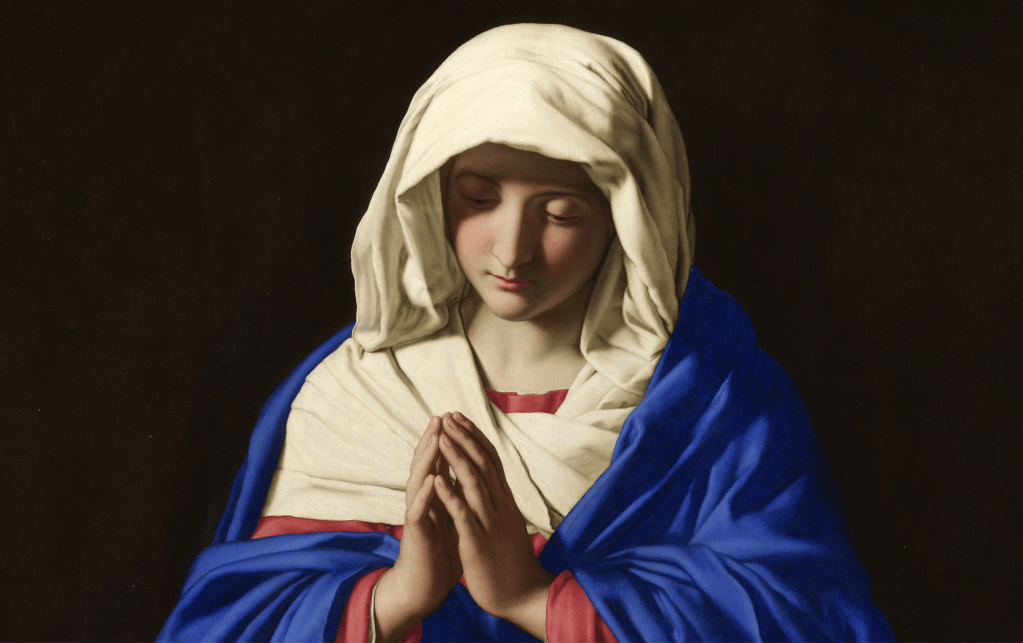
In the midst of my plight, I turn to you, O holy Mother of God, my Mother, begging you to turn the gaze of your merciful eyes upon me, surround me with your love and protection, and lead me to know and love your divine Son, Jesus Christ my Lord.
A loved one of mine was going through a difficult time in her life and, as I looked on, I sought to pray for her in the same measure as her difficulties were great.
My prayer was guided by what I had recently discovered about the intimate union of our Lady with the Sacred Heart of her divine Son, in the midst of His most difficult moments, through the revelations of Sister Maria of Agreda (a 16th century Franciscan nun in Spain).
Sister Maria writes that holy Mary, through a special grace, was given the privilege of “seeing” all that her divine Son suffered during His Sacred Passion, as well as perceiving the unceasing acts of love and prayer of His Sacred Heart.
Christ had long promised His Mother that “in return for the new human existence which she had given Him in her virginal womb [the Incarnation], He would, by His almighty power, give her a new existence of divine and eminent grace above all other creatures”, and this promise of Christ “was continually fulfilled [in the course of her earthly life].”
“To this favour was due also her deep science and enlightenment concerning all the operations of the sacred humanity of her Son, none of which ever escaped her knowledge and attention.”
But whatever Mary “perceived” in the interior of her Son’s Heart, she also ”imitated” with fidelity:
“Whatever she thus perceived she imitated; so that she was always anxious to study and penetrate [Christ’s interior acts] with deep understanding, to put them promptly into action, and to practice them courageously and zealously during all her life. In this neither sorrow could disturb her, nor anguish hinder her, nor persecution detain her, nor the bitterness of her suffering weaken her.”
As a consequence of her “deep science and enlightenment”, Mary “felt in her own virginal body all the torments of Christ our Lord, both interior and exterior.”
But within such a hidden mystery, “there was concealed therein another mystery. This was, that the desire of Christ to see His exalted love and [goodness] as exhibited in His Passion copied in all its magnitude in a mere creature, was fulfilled in her, and no one possessed a greater right to this favour than His own Mother.” (Mystical City of God, volume 3, Chapter XXII, 670)
Thus was Mary increasingly conformed to the likeness of her divine Son, both in His suffering and in His acts of mercy—even in the midst of His most difficult and painful torments.
Filled with these thoughts, I pondered, how much more can Mary’s vision penetrate the depths of our own experiences, trials, and struggles?
With each glance of her soul, Mary understood the depth of Christ’s suffering as well as the unfathomable love which moved Him to suffer. If her gaze can penetrate all the depth of the Son of God’s suffering, love, and interior movements, how much more can Mary penetrate all the depth of our own hearts?
Do we not pray in the Salve Regina, “…turn then, O most gracious advocate, your eyes of mercy towards us, and after this our exile, show unto us the blessed fruit of your womb, Jesus”?
Just as Mother Mary was fully present to Christ in His suffering, she is also able to be present to me in the course of my earthly pilgrimage, and nothing is impervious to the turn of her merciful gaze.
By a special grace from God, the one who is “full of grace”, with one glance of her eyes, understands me better than I understand myself. And with that understanding, Mother Mary sees clearly all the depth of my struggles, the nature of my pain, and the desires of my heart.
I therefore resolved to make the following prayer for my loved one, and to entrust her, and all the dimensions of her quest, to the holy Mother of God:
I beseech you, holy Mother of God, my Mother Mary, to turn your loving gaze upon my loved one, surround her on every side with your unfailing protection; cover her in your holy mantle; press her to your holy bosom; and receive all the depth of her needs, struggles, and intentions in your Immaculate Heart—both those intentions that are spoken, and those that remain hidden—with the same love with which you never failed to watch over your divine Son, unto peace, joy, and eternal life.
“Hail Mary, full of grace, the Lord is with thee. Blessed art thou among women, and blessed is the fruit of your womb, Jesus. Holy Mary, Mother of God, pray for us sinners, now and at the hour of our death. Amen.”
Theology is the study of God’s relations with humankind, God’s intervention in human affairs, God’s Self-revelation, especially in the Incarnation, when the Son of God became man and entered human history as Jesus, the Christ.
God’s Self-revelation was complete when the Father sent His only begotten Son into the world, because the Son of God is “the effulgence of his glory, and the very image of his substance.” (Hebrews 1:3)
Theology seeks an understanding of God’s revelation, or as St Anselm put it, theology is “faith seeking understanding”.
The revelation of Jesus Christ is summarised in the Apostles’ Creed, elaborated in the dogmas of the Church, and further expounded in the teachings of the Church Councils, the Fathers, Doctors, and Saints of the Church.
The word “dogma” does not mean “an obstinate insistence upon a certain point of view” (the modern day, pejorative sense of the word), but actually means a teaching that is both (1) revealed by God; and (2) defined by the Church as an integral part of God’s self-revelation.
Therefore, a “dogmatic teaching” is a teaching that is always and everywhere true, because it rests on the authority of the God who reveals Himself, and the authority of the Church which testifies to God’s self-revelation.
Some of the greatest theologians in the history of the Church include Saint Paul the Apostle, Saint John the Beloved, Saint Augustine, Saint John Chrysostom, Saint John Damascene, Saint Thomas Aquinas, and others.
The Bishops of the Church today face the most difficult crisis in the entire history of the Church–a crisis greatly magnified by a series of crises layered one upon another, a crisis that manifests on every level of the Church’s existence: spiritual, ecclesiological, theological, liturgical, and pastoral. But the Bishops, successors of the twelve Apostles of Christ, also have great potential to transform the Church and the world.
In this letter I propose to give a brief outline of the origin of the Bishop’s Office, the range of challenges which confront the Bishops, the heart of the present crisis, the spiritual danger that souls are facing, and, last but not least, the power and efficacy of the Gospel of Jesus Christ.
Origin of the Bishop’s Office
In the year 33 AD our Lord Jesus Christ, having risen from the dead, ascended into heaven in the sight of His holy Mother Mary and His Apostles and was seated at the right hand of the Father. Ten days later the Holy Spirit came upon them amid the sound of a rushing wind and tongues of fire which sat upon their heads.
The twelve Apostles were empowered to teach the Gospel, govern the Church, sanctify souls for heaven, and to pass on their mission in an unbroken succession of shepherds until the end of the world.
The Apostles launched their evangelical mission with little more than the rigorous training, the spiritual gifts, and the Divine authority which Christ had bestowed upon them. The Church which they helped to establish (Ephesians 2:20) had, within three centuries, transformed virtually the entire world.
The Present Crisis
Fast forward 2,000 years and it appears that today there are powerful forces both in the world and in the Church hierarchy which would seek to reverse everything that the Apostles worked so hard to establish.
From the Second Vatican Council to the effects of the sexual revolution to the threat of totalitarian regimes to the ever widening influence of relativistic ideologies to the advent of Pope Francis to the widespread contestation of the definition of marriage to the present day Covid Crisis, the Church has suffered so many assaults within the space of just a few, short decades.
The Church is being tossed to and fro in a severe storm that threatens her very life, the teaching of the faith, the objectivity of moral values, authentic pastoral practice and, it seems, the very foundation of her Divine authority.
Will she survive? Will she emerge unscathed? “When the Son of Man comes, will He find faith on earth?” (Luke 18:8)
A Real Pandemic?
Today we are witnessing a world thoroughly shaken by an alleged health crisis.
Given the near global response to the virus, as the life and activities of the Church have undergone significant reconfiguration, the nature of the Church and her relationship to her children are implicitly called into question.
But who is pulling the strings of history? Is it the global elites who seek to build an earthly utopia on their own terms and conditions? Or is the Covid Response Team simply reacting to a worldwide health crisis? Or is it fair to say that, in the greater scheme of things, any and all such manoeuvres and machinations, regardless of their origin and purpose, are subordinate to the omniscience and omnipotence of a benevolent God, who determines the real course of history in mysterious ways?
Whatever you think about these matters, what is undeniable today is that we are witnessing the most universal and pervasive forms of intervention in the state of human affairs that the world has ever seen.
So what is really happening? Is the pandemic really real?
The Two Narratives
There are basically two competing narratives playing out on the world stage.
On the one hand, there is a narrative that says the new coronavirus is highly dangerous, that we ought to practice widespread lockdown measures in order to save lives and to completely eradicate the virus from society, and that we ought to suffer whatever the cost to our social, economic, and political freedoms in the meantime.
This idea was based upon theoretical contagion models—not on real data—which predicted millions and then tens of millions of deaths, was widely promoted by the mainstream media, and was acted upon by (most) governments.
On the other hand, there is another narrative, supported by many scientists and medical experts, which claims that the coronavirus is only about as dangerous as the common flu, that you cannot possibly eradicate it completely from society (no matter how many lockdowns you enforce), and that widespread lockdown measures have caused far more damage than the virus could ever have done.
A large number of governments together with the mainstream media are opposed to this narrative—so much so that many of us have long stared with wide-eyed fascination at how insular the Covid Response Team has been to the well researched and highly reputable opinions of renowned scientists and top medical experts from around the world.
The list is enormously long but it is worth mentioning a few of them:
In May 2020 the UK’s Chief Medical Officer confirmed that covid-19 is “harmless to the majority” of people.
Also in May the CDC (Center for Disease Control) released a statement saying that coronavirus is “nowhere near as lethal as earlier [theoretical] models claimed.”
In August the head immunologist at Tel Aviv University revealed that 99.99 percent of the world’s population has survived covid-19.
And from a medical report in September 2020: “According to the latest immunological studies, the overall lethality of Covid-19 (IFR) in the general population ranges between 0.1% and 0.5% in most countries, which is comparable to the medium influenza pandemics of 1957 and 1968.”
Early in October, 9,000 (nine thousand) medical professionals signed a joint document strongly criticising the lockdowns. One could multiply such corroborating reports almost endlessly.
Which of these two narratives will prevail, in the final analysis? That remains to be seen.
Assume For A Moment
But let’s assume for a moment—just for argument’s sake—that there is a real pandemic. What would that mean for the Church?
Even if there were a real pandemic, could the Bishops actually relinquish their responsibility for the care of souls—a responsibility they have assumed in the eyes of God? Could the Bishops’ God-given mandate to save souls be justifiably subordinated to the strictures and demands of a health crisis? Would souls have less need of God in the event of a health crisis?
Let us acknowledge, the choice to close or to restrict Church services in the event of a health crisis is to subordinate the care of the soul to the care of the body, and effectively to reverse the order of priorities mandated by our Lord Jesus Himself:
“And do not fear those who kill the body but cannot kill the soul. Rather fear him who can destroy both soul and body in hell.” (Matthew 10:28)
Such a reversal of priorities has consequences for the understanding of the nature of the Church. It reaches deep into the life and consciousness of the Church, undermining traditional doctrines regarding the Divine foundation of the Church, her God-given authority, and her God-given mission.
If the subordination of the soul to the body continues it will lead, sooner or later, to the complete subordination of the Church to the State, forsaking obedience to her Lord and Master, Jesus Christ.
The Message of Complicity
When the doors of the Church are closed in the face of believers this fosters an insinuation that the holy Mass and other Church services are no longer “essential”.
When masks are mandated in Church this is counterproductive because, according to Scripture, we come together as the Body of Christ so that “with unveiled faces we may behold the glory of the living God.” (2 Corinthians 3:18)
When believers are denied Holy Communion on the tongue it robs them of a precious opportunity to express due reverence, devotion, and love for the Lord Jesus in the Eucharist.
When Church services are cancelled this deprives the faithful of coming into the sacramental Presence of God and worshipping God.
When the Bishops are all too ready to capitulate to widespread Church restrictions and closures—never before witnessed on such a scale in 2,000 years of Church history—this cannot but give a subtle impression that the Church has been transformed into a social institution, an instrument of the State, and has implicitly denied her Divine constitution.
Such a reconfiguration of the life and activity of the Church cannot help but insinuate that the Church is, in essence, subject to change; that she is no longer the custodian of the Revelation of Jesus Christ; that her role in the economy of salvation is non-essential.
Assault On The Faith
How many souls will be able to withstand the Covid Persecution? How many will emerge with a living faith? In the face of such wholesale surrender to the State, will the Church ever recover her rightful place in society?
This assault on the Faith is rendered all the more dangerous because it follows upon the heels of decades of spiritual devastation: for at least two or three generations vast numbers of Catholics have been deprived of authentic catechesis, secular ideologies have been quietly invading the life of the Church, moral values are ridiculed or altogether abandoned, and the Gospel often suffers dilution and compromise.
The Church and the World
The Church cannot serve both God and the world. She must choose one or the other.
The Lord Jesus said that we are “in the world” but not “of the world.” (John 17: 11-19) And the Apostle John wrote: “If anyone loves the world, the love of the Father is not in him.” (1 John 2:15)
But we might ask: Ought not the Church to love the world, as “God so loved the world, that he gave his only Son, that whoever believes in him should not perish but have eternal life”? (John 3:16)
Here we come face to face with a profound paradox—a paradox that we ought to embrace rather than surrender to an unholy compromise with the world.
As G.K. Chesterton famously wrote, can a man “hate [the world] enough to change it, and yet love it enough to think it worth changing?” (Orthodoxy)
Ever since Vatican II, when Pope John XXIII’s fundamental impulse was to bring the Church up to date with the times (aggiornamento), the Church adopted what can rightly be called an ambivalent attitude towards the world—an attitude which has rarely been clarified or set right.
Can the Church both love and not love the world at the same time? Yes, but each in a different sense. The Church ought to conform herself, not to the world, but to Christ for the sanctification of the world.
Any suggestion or hint that the Church could possibly learn from the world in matters pertaining to the salvation of souls is not only unwise but thoroughly and grievously mistaken.
It was the Council’s compromise on this point, explicit or implicit, that introduced a basic disorientation into the heart of the Church, a festering wound that has spawned a multitude of errors and heterodox tendencies.
Saint Paul reminds us: “Do not be conformed to this world, but be transformed by the renewal of your mind, that by testing you may discern what is the will of God, what is good and acceptable and perfect.” (Romans 12:2)
The basic orientation of the Church to the world will feed into everything: the Church’s faith, doctrines, moral teaching, pastoral practice—everything!
Pope Francis
Vatican II’s ambivalent embrace of the world is complicated even further by the advent of Pope Francis, who demonstrates, intentionally or unintentionally, a strong and consistent tendency to engage with heterodoxy.
The Bishops have a grave responsibility to remind Pope Francis what the First Vatican Council taught clearly and unequivocally:
“For the Holy Spirit was promised to the successors of Peter not so that they might, by his revelation, make known some new doctrine, but that, by his assistance, they might religiously guard and faithfully expound the revelation or deposit of faith transmitted by the Apostles.” (Session 4, Chapter 4, paragraph 6)
A Silent Spiritual Holocaust
For all the above reasons, what we are now witnessing is a silent, spiritual holocaust: the holocaust of multitudes of vulnerable and unsuspecting souls on the altar of the Bishops’ silent complicity with the world.
How many will survive?
The Lord declared: “My people are destroyed for lack of knowledge. Because you have rejected knowledge, I will also reject you as My priests. Since you have forgotten the law of your God, I will also forget your children.” (Hosea 4:6)
Jesus said, “the truth will set you free.” (John 8:32)
Christ came “neither to condemn us in our sins nor to condone our sins, but to save us from them”, as a faithful priest once said. Hell is real. Salvation is real. The Lord takes no pleasure in “the death of the wicked, but rather that they turn from their ways and live.” (Ezekiel 33:11)
These truths do not change with the passage of time.
A Call to the Bishops
Today in the midst of this crisis, as one crisis has been added to another and again to another, the Church has need of Bishops and priests who will be like the Apostles, their predecessors, who transformed the world by the witness of their word, and most often by the witness of their blood, the Holy Spirit working through them with great signs and wonders.
There is no challenge, obstacle, or difficulty that could prevent our shepherds from achieving what the twelve Apostles achieved.
Saint Paul testified, “For I am not ashamed of the Gospel, for it is the power of God for salvation to everyone who believes.” (Romans 1:16)
The Gospel is “ever ancient and ever new”, the fruit of God’s Self-revelation in the Incarnation of Jesus Christ, the fount of eternal salvation.
“Jesus Christ is the same yesterday, today, and forever.” (Hebrews 13:8) His message does not change with the changing times.
When proclaimed in its purity and entirety, the Gospel exerts a powerful attraction on the soul—because the soul hungers, consciously or unconsciously, for the word of the Lord, for the truth that will set it free, for the fruits of the Redemption which Christ paid for with His own Blood.
This is not to say that the Bishops are entirely missing in action. A few Cardinals and Bishops have been strongly vocal about the rights, duties, and needs of the Church. But the majority are still silent—so much so that recently Archbishop Carlo Maria Viganò noted that such silence is ”deafening”.
When Peter and John were hauled before the council of priests and high priests they were commanded “not to speak or teach at all in the name of Jesus.” (Acts 4:18)
But Peter and John responded: “Whether it is right in the sight of God to listen to you rather than to God, you must judge, for we cannot but speak of what we have seen and heard.” (Acts 4:19)
What will the Bishops now say?
We need you, the successors of the Apostles, to rise to the occasion. The Lord is waiting for you. The Church is waiting for you. The world needs your unfailing witness to our Lord Jesus Christ.
LG Sleiman
Lastest revision: 2:00 pm, 7th November 2020. Sydney, Australia.






 Jesus Risen